

Uber 已将其网络监控从僵化、手动的本地堆栈转型为可编程的云原生可观测性平台。新架构包含灵活的数据摄取流水线、中央告警系统以及一个通过 API 自动在全区范围内分配工作负载的 “Dynamic Config” 服务。这一转变强调了供应商独立性和成本控制,通过利用 Prometheus 和 Grafana 等开源工具显著降低了授权费用。至关重要的是,Uber 将此次基础设施现代化视为 AI 的先决条件,认为标准化且干净的遥测数据是未来 AI 驱动的预测性维护和自动化根因分析的核心基础。
Transportation company Uber has published an account of its new observability platform on its blog, highlighting that for them, network visibility is now a strategic capability rather than a set of discrete monitoring tools.
In the article, Uber describes how it has replaced a monolithic, on-premises monitoring stack with a modular cloud native observability platform built around open source technologies and APIs. The authors explain that the old system relied on heavyweight components and manual configuration, which could not keep pace with rapid changes across offices, data centres and cloud environments. They state that they have now built a flexible data ingestion pipeline, a central alert ingestion application and a dynamic configuration service that together route telemetry, normalise alerts and keep collector configurations aligned with the live network inventory.
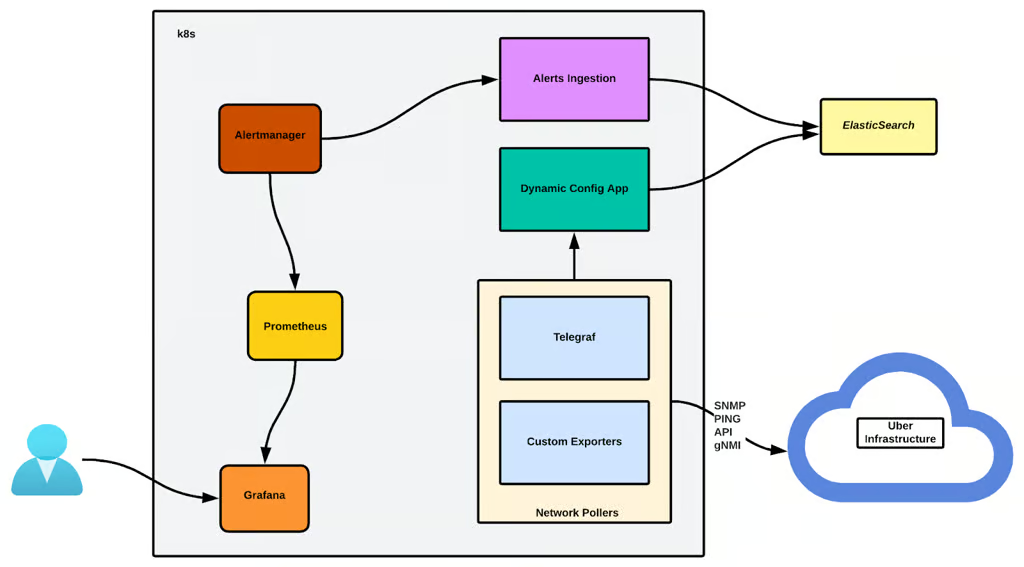
The post explains that automation is a large part of Uber's new approach to observability. In the blog, the team explains how its Dynamic Config application automatically redistributes polling workloads across regions and deploys configuration changes globally via APIs rather than by having engineers making manual changes. They frame the monitoring fleet as a programmable surface that engineers can influence by adding metadata and policies. This position mirrors other recent work on cloud infrastructure observability, where engineers describe platforms that ingest and correlate metrics, events, logs, and traces in near real-time and manage alerts through central policies. In line with this, Uber’s post presents automation as the only viable way to manage observability at corporate scale, and not just as an add-on. The authors detail how the CorpNet Observability Platform monitors routers, switches, power distribution units and other infrastructure devices that support their collaboration and enterprise applications.
Uber have also made significant efforts around vendor independence and cost control. In the post, the engineers explain that the shift to a cloud-native open-source first stack cut "hundreds of thousands of dollars" in recurring licence fees and reduced its dependence on commercial software. The company describes how it deployed open-source components together with its own alert ingestion and configuration system to make a full platform. This approach reflects findings from recent observability surveys, such as one from Logz.io, which reports that many organisations heavily use open-source tools like Prometheus and Grafana as part of an effort to contain the costs of commercial platforms. This contrasts with vendor narratives which promote integrated off-the-shelf observability platforms which abstract away implementation details. The article also clearly implies that Uber is willing to invest engineering effort in exchange for a lower recurring spend and more flexibility.
Uber’s engineers also use the blog to set expectations about the role of AI, with their existing work forming a foundation for future AI-based automation. They argue that by cleaning and standardising telemetry now, they create conditions for "even smarter, AI driven network operations" in the future. Other industry pieces echo this idea. Network provider Equinix, for example, writes that generative AI can add "a further level of intelligence to network observability" by improving alert handling and speeding up root cause analysis. Articles on AI driven data centre networks make similar points and present observability data as the fuel for anomaly detection and predictive maintenance.
Across all of these topics, the blog post presents observability as an ongoing practice rather than a one time project. Uber have chosen a long-distance running metaphor and it writes about changing shoes and pacing strategy as it progresses. Other recent reports and guides, such as this from Splunk, adopt similar language and describe observability as a "discipline" that demands sustained investment in tools, skills and process.
"Generative AI is bringing a further level of intelligence to network observability, allowing users to monitor their networks, manage alerts, proactively detect issues and assess performance holistically," writes Equinix’s network observability team in its 2025 analysis of AI and network operations. Uber’s blog post shows how a large technology company can prepare for that future by first rebuilding its internal observability foundations and only then inviting AI to sit on top.
The Uber blog post concludes by claiming that Uber's new observability platform is ready to support both current operations and future AI-driven capabilities.