
本文介绍了“Tiny Teams”的概念——一种通过 AI 工程师和效率工具实现的高效组织,其收入超过员工人数。文章认为,这种模式代表了组织设计的下一个重大转变,即从单人 AI 工程转向协同多人模式。本文的核心内容总结了 Gamma、Gumloop 和 Bolt.new 等七个成功的 Tiny Teams 的通用建议,并将它们的最佳实践归纳为四个方面:招聘(强调以产品为导向的招聘和工作试用)、文化与价值观(注重低 ego、高信任、透明度和用户至上)、运营(尽量减少会议,利用 AI 承担幕僚长和支持角色,并进行严格的优先级排序)以及技术与产品(倡导简单的技术栈、最小可行产品 (MVP) 和强大的内部基准)。本文是对这些团队访谈精选的介绍,旨在为在 AI 时代构建敏捷、有弹性和高影响力的团队提供切实可行的见解。
Join our Build your own Deep Research class with Noah and Laurie tomorrow!
At the dawn of the decade of agents, AI Engineers and Productivity Agents are combining to create highly efficient teams from the smallest startups to internal skunkworks/refounding moments at decacorns and publicly listed companies.
I previously defined “Tiny Teams” aspirationally as “teams with more m in ARR than employees”, because efficiency is the ultimate governing force for intellectual (and capital) honesty, not quantity of tokens or money or lines of code spent vibe coding. It is also a backdoor into a speed discussion, because smaller teams generally move faster, and faster teams generally win. Inter-Human trust & I/O is the bottleneck.
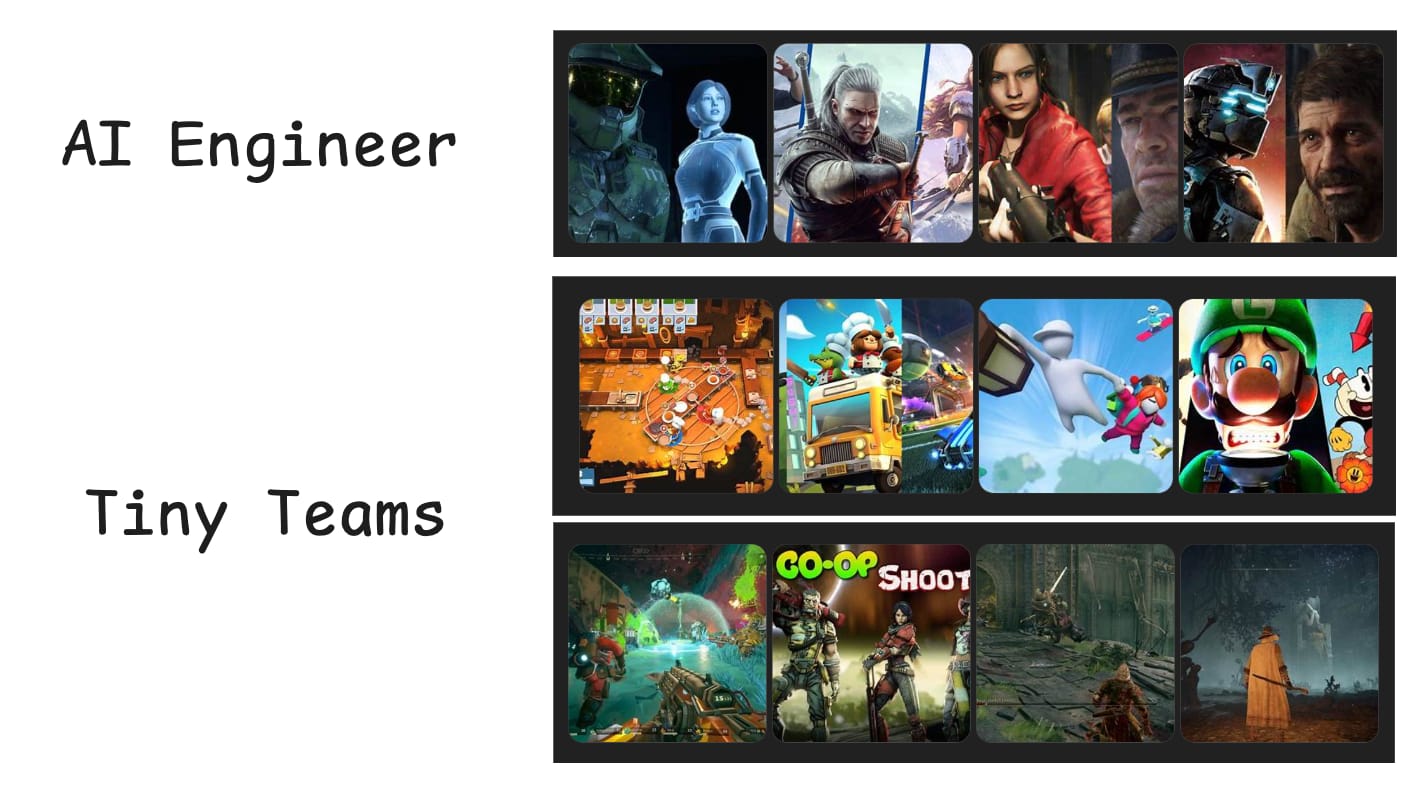
The Tiny Teams concept has resonated so strongly that it’s pretty clear it is the next major transition of the org chart as we go from level 2 to 3 AGI. If the AI Engineer was the single player game, Tiny Teams are the co-op multiplayer game1, capable of far more adaptability, resilience and “damage per second”. Not all players are human.
The study of org design is as old as human civilization, but this is the first time knowledge work can be augmented, automated, and scaled on demand, and organizations that don’t reflect this reality have their head in the sand.
For AIEWF I curated some of the best examples of Tiny Teams I could find and simply asked them to talk about how they run themselves. We are releasing the full playlist today (which you can find in YouTube and NotebookLM format):
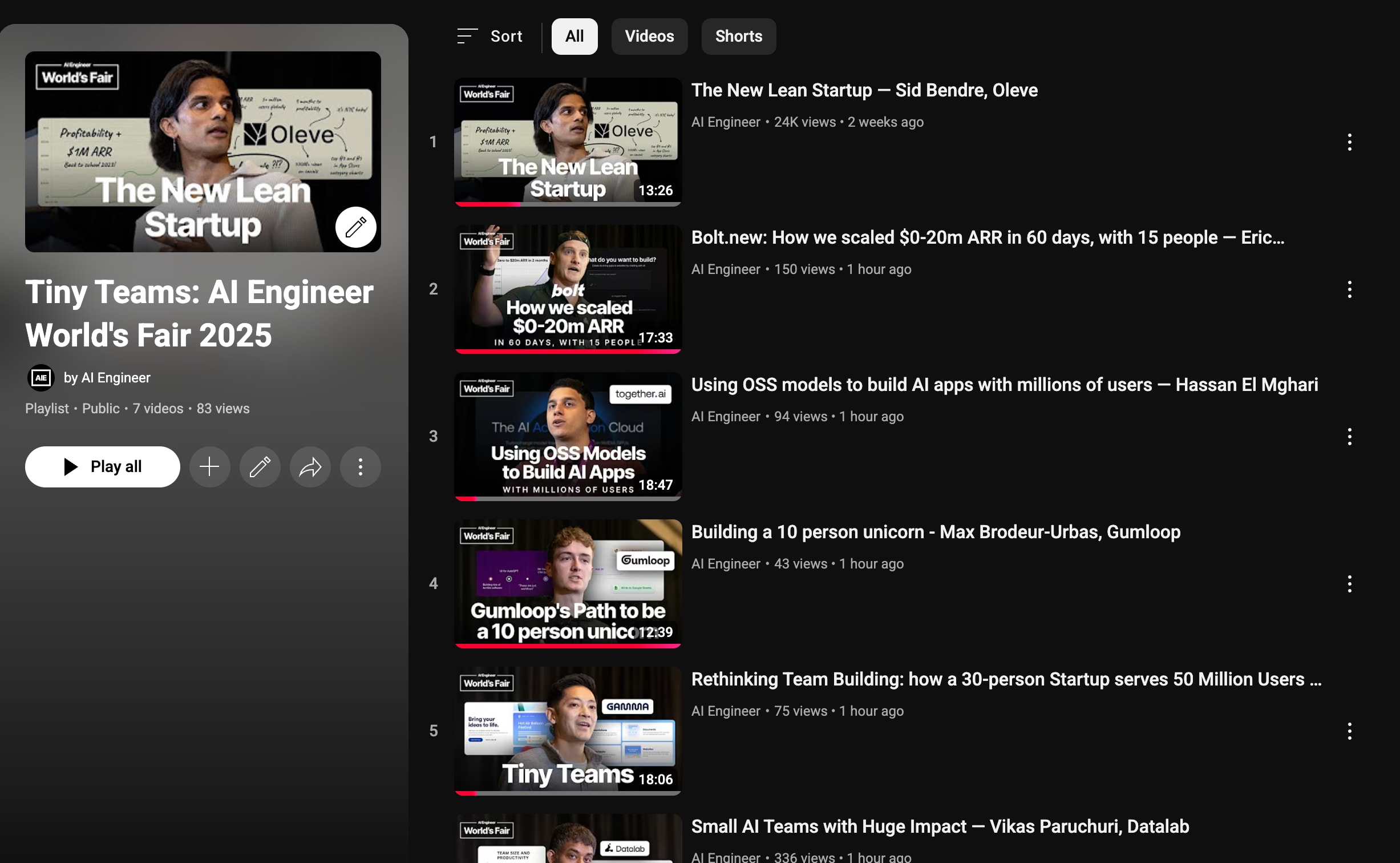
Seriously, bookmark the Tiny Teams NotebookLM! We’ll keep adding to this over time.
Universal advice from 7 teams w/ 100 people & 200m ARR. manually summarized.
-
Hiring
-
Hire right or not at all: have to be excited about the candidate or it’s a no
-
Work Trials: paid projects for 4days-3months to be sure it’s a good fit
-
Product-Led Hiring: top customers who quit their jobs to join you
-
Top of market salaries: 95th+ percentile salaries
-
Small (<15) crew of senior generalists: much fewer juniors
-
-
Culture & Value: keep a living culture deck and live it
-
Low ego, high trust: trust = speed, ownership
-
Independence, Grit & Resilience: ignore standard VC advice, persevere
-
Radical transparency and accountability: wall of work, show & tells
-
User focus: Work closely with users, celebrate them, delight in feedback
-
Camaraderie, speed: Have fun, do retreats, avoid burnout
-
-
Operations
-
Almost no meetings: “deep focus” - building instead of talking about building
-
AI Chief of Staff: automate research, marketing etc w/ Gumloop or Lindy
-
AI Support: very well fleshed out at this point. e.g. see Parahelp and Railway
-
Let Fires Burn: in order to prioritize on the 10% critically important
-
Compound learning: Oleve phrases it “Don’t Learn It Twice” - build reusable templates and playbooks
-
In Person: either have an office, or VERY frequent AirBnB hack weeks
-
-
Tech and Product
-
Simple, Boring Tech Stack: shell scripts over k8s, keep code modular.
-
Simple Product: start from UI wrapper over one API call to a LLM.
-
Feature Flags/Experimentation: one of Oleve’s core principles.
-
Benchmarks: create top tier internal evals for LLMs/harnesses. Market them.
-
(this section is being updated live - if you are reading this on email, this will be updated on the live blog on Latent.Space. We’re shipping this out so you can just watch the talks without our commentary, but of course we actually want to absorb the lessons using human attention. Come back in a few days.)
Gamma: Generalists + Coaches + Culture
Gamma is one of the top 25 consumer AI products in the world, serving 50 million users with a remarkably lean team of only 30 people. CEO Grant Lee attributes it to three pillars: generalists, player-coaches, and brand/culture of a “small tribe”.
Gumloop: Extreme Hiring, No Meetings, Automate Everything
Gumloop was one of the inspirations for Tiny Teams with the stated goal to be a 10-person unicorn. CEO Max explains the extreme lengths he goes to to be super picky, from “product led hiring” to 4 day work trials all over the world.
Bolt.new: Ruthless Prioritization, even with Fires
Full disclosure, I am an investor since the Stackblitz days, and we’ve done a podcast with Eric and Itamar, but the story of how Bolt kicked off the “AI Builder” category hitting $20m ARR in 60 days with 15 people is very compelling. CEO Eric says "Focusing on 10% of tasks often yields the majority of desired results, forcing clearer thinking."
Oleve: Harvesters vs Cultivators
We previously did a lightning pod with Sid so we were somewhat familiar with the Oleve story, and, fun fact, since then, this tiny team has launched a THIRD multi million dollar product that will be announced soon. (Consumer product studios operate very stealthily out of necessity). Palantir’s philosophy informs this tiny team.
Hassan El Mghari: Simple but Exciting
Together.ai raised eyebrows as it is not “tiny”, but Hassan is classically a one man tiny team, and no stranger to the AIE stage. He now boasts 3m users with a small team.
Datalab: Layoffs = Good
Vik is author of Marker and Surya, but there are many open source vision/pdf/OCR custom models and when I invested it wasn’t obvious how something like this could turn into a profitable company — 7 figure ARR with 7 people, serving tier 1 AI labs. Stretching out the “golden period” of startups where high trust and careful, deliberate hiring of senior generalists dominate is key - per Jeremy Howard.
Every: Benchmarks are Memes
We think Evals are important, yes, but not enough teams create their own benchmarks to eval models and harnesses to improve their product… and market themselves. Every is “high-taste tester central” and just raised $2m from Reid Hoffman et al. Every’s head of AI Practice Alex Duffy talks about how they see benchmarks and launches AI Diplomacy.
Addendum
There are more Tiny Teams than just the ones we managed to feature of course. Cognition was until recently a team of 80 making well north of $100m, and we’ve been blessed to have Scott Wu come by to tell the story of Devin 1.0 and Devin 2.0. Clearly “Devin 3.0” will involve a VSCode Fork, as everyone, even Amazon, has to do in 2025.
Stay tuned to Latent Space for more Tiny Teams….